
Easter 2026 Update
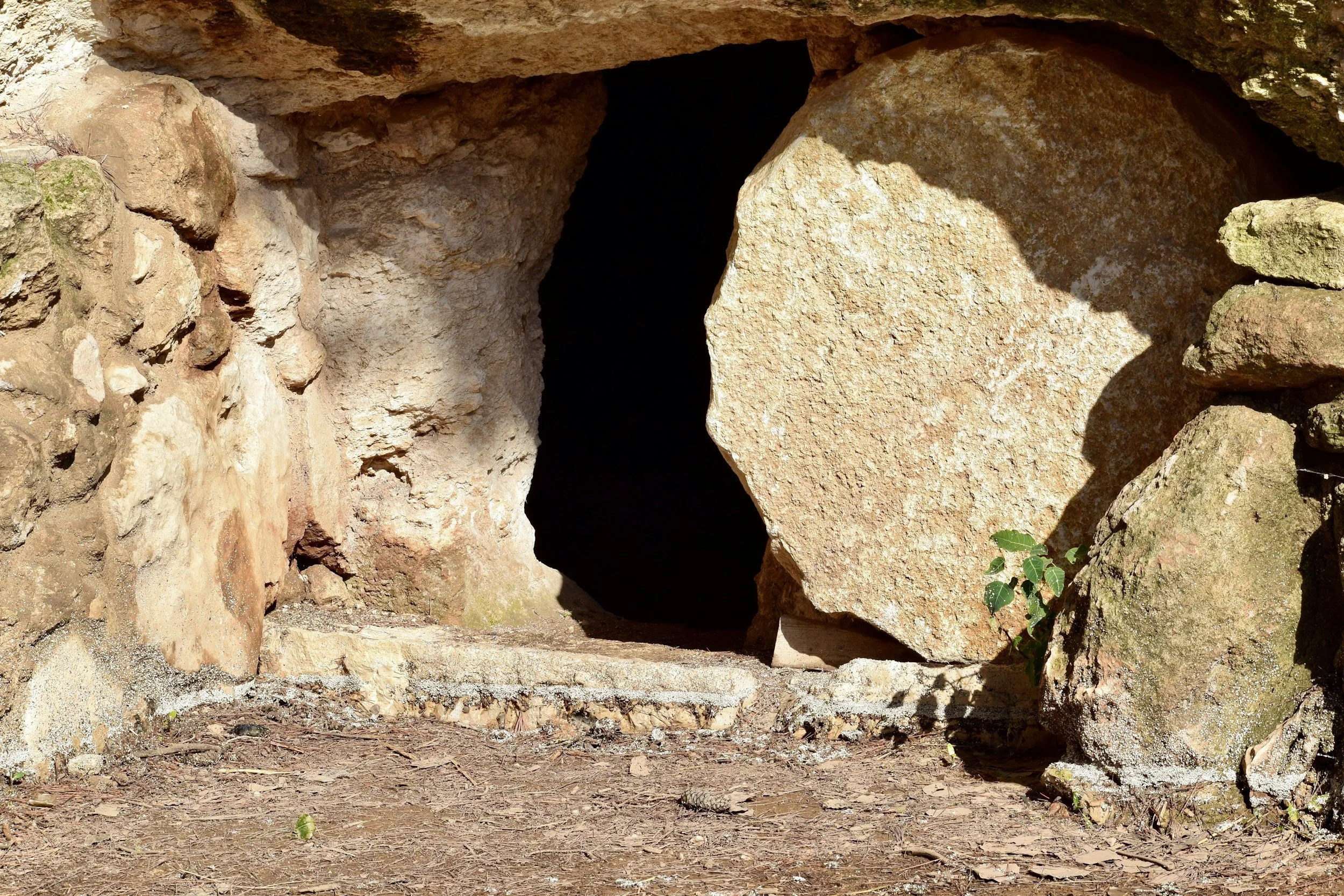
HE IS RISEN!
As far as God is concerned, death is a stain and defilement on his universe. Death is an insult to God the creator, a stench obnoxious to God. It was God who made humans in his own image, so a dead corpse going to corruption is as obnoxious to him, and more so, as it is to us. And in the Old Testament he taught his people that those who approach him must be cleansed from every stain and smell of death. (David Gooding, Journeys with Jesus)
As we are now in the Easter season, it seems appropriate to include something from Journeys with Jesus, particularly Dr Gooding's teaching from the fourth and final journey of John’s Gospel.
You will find an excerpt from the book at the end of this newsletter. Since it was published, we've been encouraged to hear of how the book has helped Bible teachers in their studies in John, and others having one-on-one studies in that Gospel.
NEW SERIES!
SEEING THE BIG PICTURE
Our new series, Seeing the Big Picture, aims to help readers grasp the rich sweep of selected books of the Bible—what they say, why they were written, and why they still matter today. Concise and engaging, each volume offers a clear view of the big themes and key truths that shape God’s Word, whether you’re discovering the Bible’s message for the first time or teaching it to others. Our first two books in the series, Ruth and Titus, will be released 30th April.
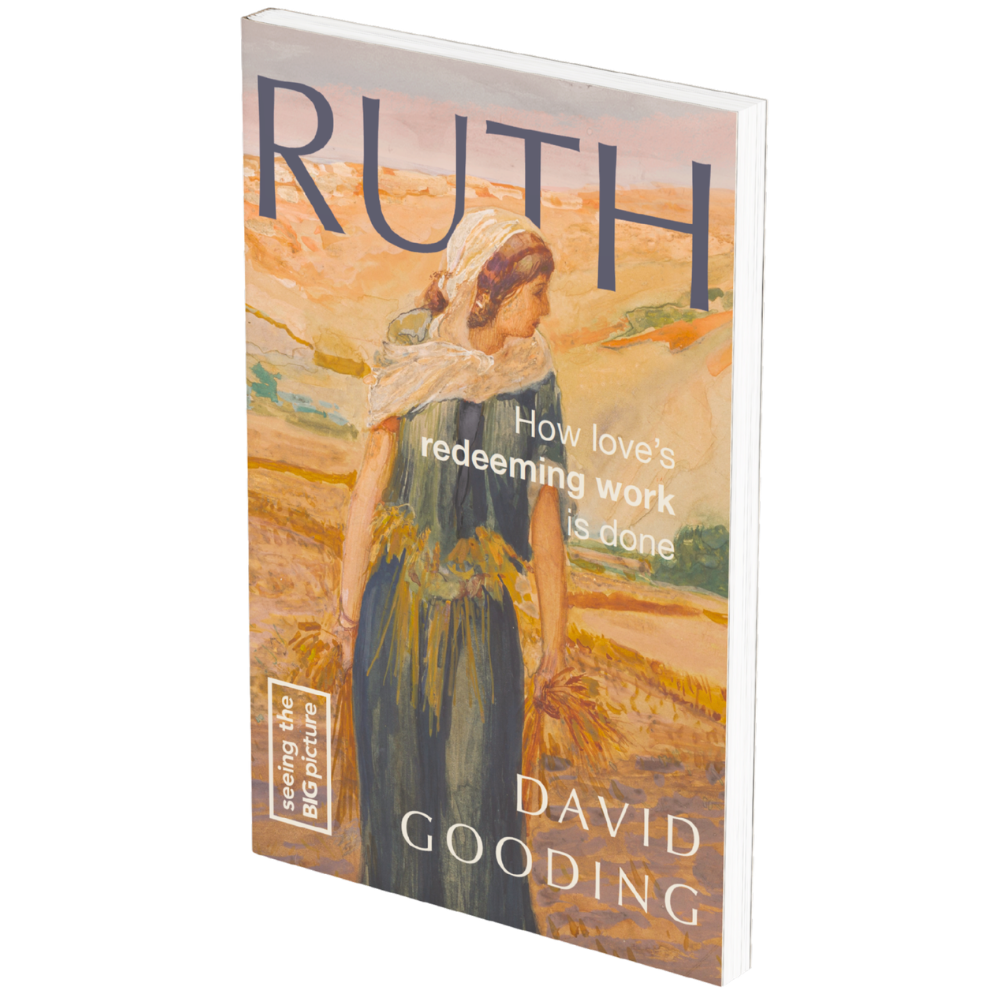
Faith. Hope. Love.
With them, life flourishes; when we lose them, life feels unbearable. Where do we turn when everything falls apart, when purpose slips away and we doubt that God still cares?
David Gooding shows us the big picture of the book of Ruth—a story that centres on another woman, Naomi. Her world collapses with the loss of her husband and sons, and she feels that God himself is against her. Yet God quietly rebuilds her joy through Ruth, who leaves her own people to seek the God of Israel. There she finds a kinsman-redeemer who takes her as his bride and carries forward the line that would one day bring Jesus the Messiah into the world. Here is God’s redemption, told in a true story that gently leads our hearts back to faith, hope and love in him.
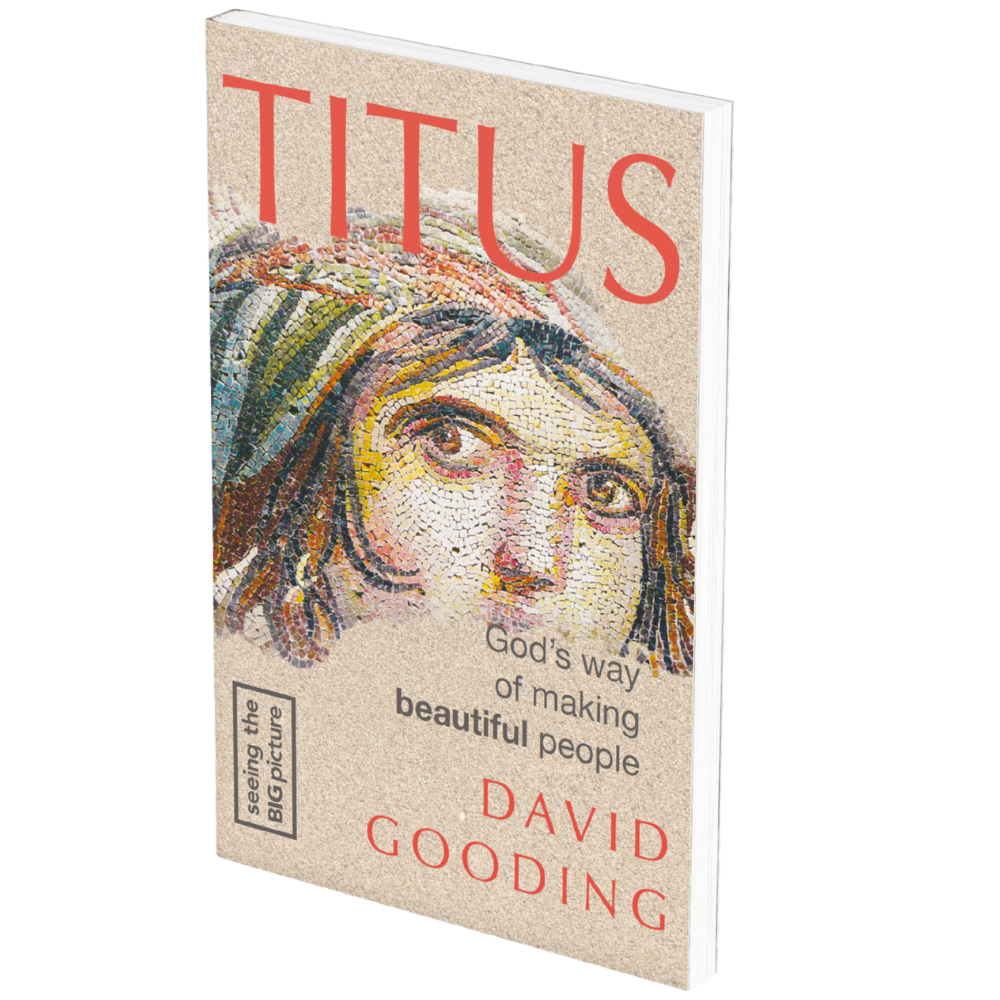
Beauty. We chase it, define it, redefine it.
We invest fortunes trying to keep it, to capture that elusive glow. Every culture has its own ideal, yet we all whisper the same idea: beauty lies in the eye of the beholder. But what if the ultimate beholder sees beauty differently?
David Gooding shows us the big picture of what Paul is saying in his letter to Titus. Here we discover God’s secret to true radiance—not a glow that fades, but a goodness that lasts. He’s shaping people who love what is good and delight in doing it. This is beauty crafted by his mercy, defined by his grace, and sustained by his love. God’s masterpiece? People made truly beautiful from the inside out.
From Symbol to Reality: The Journeys of the Son of God in John’s Gospel
The work of compiling the fourth and final journey in John's Gospel has begun! Drafts of journeys 1–3 are now complete and being edited. Thank you for your continued patience. We think it will be worth it!

New Myrtlefield Office
We have completed the sale of 89 Wellington Park, and have the keys in hand. Hurrah! We now need to do some repair and improvement work before we can move in.
David Gooding Answers
We have uploaded all the remaining Q&A onto our website – that’s over 80 more, making a total of over 500! Below are some samples:
Prayer Points

Pray with us as we review our Chinese translations and consider the best way of distributing them, given the current limitations within China.
Pray for wisdom and discernment as we consider translators and partner ministries for the books to reach the people of Iran. Farsi is a new language for us, and we have received initial translations that are being reviewed.
Pray for both of these languages, and for other ongoing projects, we need a lot of wisdom. But we are encouraged by the interest in the books and look forward to seeing how the Lord will use them.
Pray that renovation of the new building will go smoothly.
Pray that the new books would be a blessing, and for future books in the series.
Excerpt from Journeys with Jesus
John 12:1–8
Six days before the Passover, Jesus therefore came to Bethany, where Lazarus was, whom Jesus had raised from the dead. So they gave a dinner for him there. Martha served, and Lazarus was one of those reclining with him at table. Mary therefore took a pound of expensive ointment made from pure nard, and anointed the feet of Jesus and wiped his feet with her hair. The house was filled with the fragrance of the perfume.
But Judas Iscariot, one of his disciples (he who was about to betray him), said, ‘Why was this ointment not sold for three hundred denarii and given to the poor?’ He said this, not because he cared about the poor, but because he was a thief, and having charge of the money bag he used to help himself to what was put into it.
Jesus said, ‘Leave her alone, so that she may keep it for the day of my burial. For the poor you always have with you, but you do not always have me.’
Prepared for his own burial
As far as God is concerned, death is a stain and defilement on his universe. Death is an insult to God the creator, a stench obnoxious to God. It was God who made humans in his own image, so a dead corpse going to corruption is as obnoxious to him, and more so, as it is to us. And in the Old Testament he taught his people that those who approach him must be cleansed from every stain and smell of death. (See, for example, Lev 21.)
As we journey through John’s Gospel, we come to the time of the great Passover, and we see the people as they are going up to Jerusalem to purify themselves from the stain of death. All unknown to them, here comes the great Passover Lamb. By his death he shall remove every stain of sin and grant all who believe in him new life— life in Christ, the very life of God, a life that shall never die—and enable them to come to God in spirit and truth. They can approach into the very presence of the incorruptible and immortal God. That is the setting of these chapters. And they open with the scene that unfolded at the supper prepared for our Lord in the home of Mary, Martha and Lazarus in Bethany.
While they were gathered there, he announced that he was about to be buried. Far from being afraid to come to Jerusalem because he might die, he announced that he was going to be buried. Except maybe for Martha and Mary, that was news to his disciples. Though they had been told many times, they just couldn’t get it into their heads that Jesus was going to die. Not until they actually saw him dead could they take it in. They thought that he was going to reign immediately as king. Yet here he was, before he came as king, announcing that he was going to die.
It was not only that he would die, but that he would be buried. When someone objected to Mary anointing his feet with expensive ointment, Jesus said, ‘Leave her alone, so that she may keep it for the day of my burial’ (12:7). That is an important part of the gospel, for the gospel is that, ‘Christ died for our sins in accordance with the Scriptures’; but also, ‘that he was buried,’ as literally as you or I might be one day, and ‘that he was raised on the third day in accordance with the Scriptures’ (1 Cor 15:3–4).
It was Judas who objected, and when he did, Jesus said, ‘The poor you always have with you, but you do not always have me.’ This was how he defended Mary’s pouring of the ointment on him. She had given him an anointing with nard, worth more than three hundred denarii. In those days, a labourer got one denarius a day. Since they didn’t work on the Sabbath, three hundred denarii would have been the yearly wage of a day-labourer. Let’s put it in modern terms. She spent an entire year’s wages on Christ all in one go! Christ’s first justification for her action was that he was about to die and be buried.
Judas said it was irresponsible, and a sign of religion gone fanatical. It ought to have been sold and given to the poor! ‘What kind of a testimony would it be to the world, if they were to see us wasting it when there are poor folks who haven’t got enough money to buy the next crust of bread?’ There are modern Judases who talk like that too. Of course, he was a thief, and if that nard had ever been sold, he was looking to pocket some of the interest, if not the capital, out of the proceeds of the sale.
If one of your family members, say a daughter, were to demand a holiday in Spain in January, then another in Portugal in February, and various clothes to go with these holidays, you might say, ‘Well, yes, I do love you, but is this not a bit extravagant?’ But if your daughter had terminal cancer and you knew she would likely be dead in a year, you might ask if she had a last wish. If she said, ‘Yes, I would like a world cruise, and the doctor said it would be okay,’ would you still say, ‘That’s too extravagant’? If it were your last opportunity to show your love to your daughter, you would give every penny you could lay your hands on.
If the apostles had understood that Jesus was about to die, and this was the last opportunity they would have to show their gratitude, love and respect for him, how could any of them have found it in their heart to criticize him?
His second justification of her action was, ‘so that she may keep it for the day of my burial’. This was going to be the burial that would wipe out death forever. Suppose you had one million pounds, and you also had a fatal disease. Imagine then that someone came along and said, ‘I guarantee that I can cure you. It is expensive medicine, and I will have to charge you nine hundred thousand pounds for it, but if you don’t take it you will be dead in six months.’ Would you say, ‘I can’t afford that’? Surely you would say, ‘What’s money to me if I’m dead? If you can cure me and it takes nine hundred thousand pounds, I’ll give you a cheque right now. What’s money compared with life?’
If those apostles had woken up to the fact that Jesus was dying to deliver them forever from death, there wouldn’t be anything too big for them to give him. Mary had begun to understand what that burial would mean for Christ, and what it would do.
You might say, ‘She didn’t actually use it for his burial—she wasn’t there.’ Of course she wasn’t; instead of giving it to the poor she now gave it to Christ while he was still alive. He wouldn’t need it when he was buried.
The custom of using perfume to anoint the body of departed loved ones was done for practical purposes, to overcome the stench. Corruption did its ugly work when Lazarus was put into the tomb. Martha was right when she said that after four days in the tomb, Lazarus’ body would have begun to stink. But when Jesus was laid in the tomb he would see no corruption. That would be the end of the whole process of death; he would rise again! As David said in the Psalms, ‘you will not . . . let your holy one see corruption’ (Ps 16:10). He would not need ointment to mask the stench of his death. Mary, along with Martha, had perceived it, and instead of waiting until he died Mary used her money, while she had the chance, in order to show the living Lord how much she valued him.
In the face of all her detractors and critics Christ issued a comment, ‘Leave her alone.’ John had used the same Greek verb in the story of Lazarus. When Lazarus came out of the tomb, bound with his grave clothes, Christ said, ‘Unbind him, and let him go’ (John 11:44). No longer was he to be bound by death, nor the fear of it. Now he says of Mary, ‘Leave her alone’ (12:7). ‘Take your hands off; let her be free. Instead of giving it to the poor she has kept it against the day of my burial.’
Here is the command that tells us to get our values in life the right way round and in due proportion. We have a duty to the poor, and no amount of hymn singing will compensate for it if we neglect our duty to them; but let us get our values right. Do you really believe that Jesus died for you in order to break the power of death, to bring you out of the very grave, and to give you a glorious eternal life? If you do, what would you not give him, and what value would you put on him? Would anything be too extravagant?
Let me give you some advice at this moment. Don’t wait too long, for when we ourselves are dead we can’t give him anything. My advice would be, do it now while life gives the opportunity, so that we may get our proportions right. Mary anointed our Lord Jesus with ointment in preparation for his burial because, along with her sister Martha, she had discovered him to be the Christ, the Son of God who was to come into the world; the resurrection and the life. She didn’t wait until he had died and was buried before she anointed him, but spent her vast sum on him beforehand.